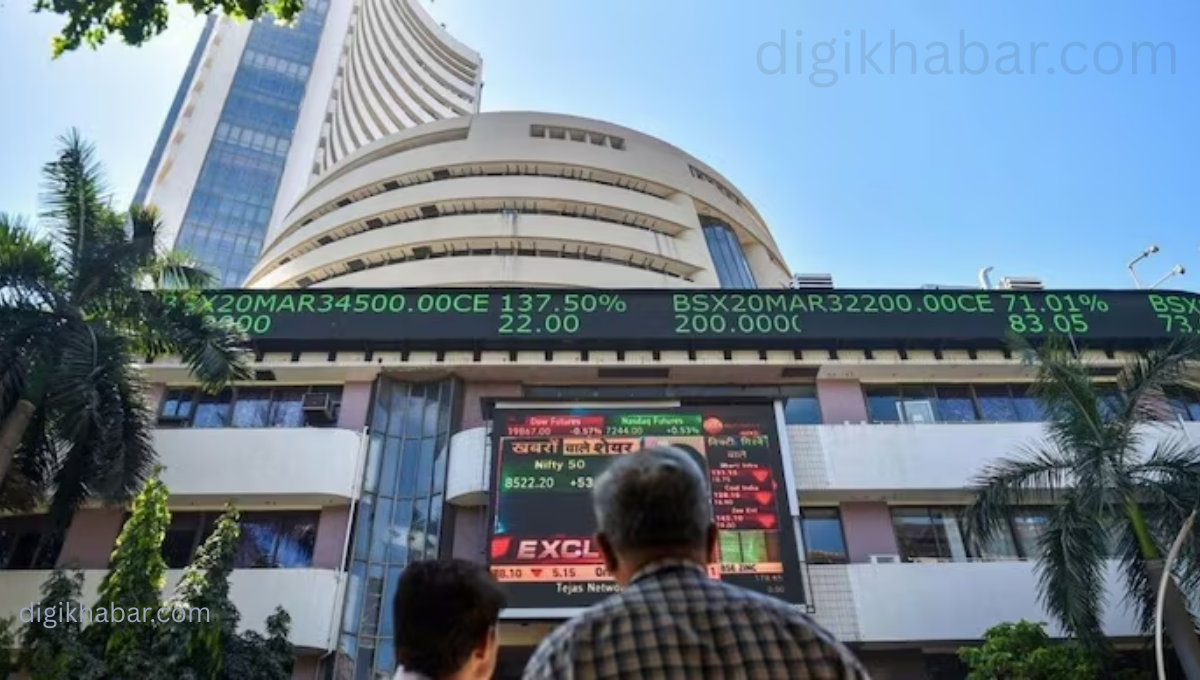
Dalal Street Faces Headwinds: As August comes to a close, investors on Dalal Street are preparing for a week that could be pivotal for market sentiment. After three consecutive sessions of losses, the Sensex ended Friday at 79,809.65, down 271 points, while the Nifty 50 slipped 74 points to close at 24,426.85. Persistent concerns over US tariffs on Indian goods, combined with domestic macroeconomic updates, have created a cautious environment for traders.
Market experts suggest that while challenges persist, selective sectors may benefit from policy support and strong domestic demand. Vinod Nair, Head of Research at Geojit Investments Limited, highlighted that consumption driven and domestic growth oriented sectors, including FMCG, durables, cement, and infrastructure, are well positioned to gain from GST cuts, government spending, and robust consumer demand.
Auto Sales and Consumer Confidence Under the Spotlight

One of the immediate triggers for the markets is the release of auto sales data for August. Analysts will closely monitor the performance of carmakers and two wheeler manufacturers, which serve as a key indicator of consumer confidence and economic momentum. Strong numbers could provide a much needed boost to investor sentiment, particularly in the consumption driven segments of the market.
US Tariffs Cast a Shadow Over Exports
The looming shadow of US tariffs continues to weigh heavily on Indian equities. The 50% duty imposed under Donald Trump’s regime, coupled with the ongoing 25% levy on crude oil imports from Russia, threatens $45 billion worth of Indian exports. Compared to other Asian nations like China (30%), Vietnam (20%), Indonesia (19%), and Japan (15%), India faces a uniquely high trade barrier, risking its competitive advantage in global markets.
Domestic Resilience Offers a Silver Lining
Despite external headwinds, India’s domestic economy has shown resilience. The strong Q1 GDP growth, largely fueled by government expenditure and policy initiatives, offers some cushion against global uncertainties. Analysts believe that sectors such as textiles, metals, and equipment manufacturing are likely to be directly impacted by tariffs, whereas IT and pharma may experience sentiment driven pressure without direct exposure.
Investor Strategy and Outlook
With limited progress in resolving trade disputes, the market faces continued uncertainty. Experts recommend a multi-cap asset allocation approach to balance risk and reward, while keeping a keen eye on upcoming macroeconomic data from both India and the US, including PMI readings, payroll updates, and unemployment figures. These metrics will play a crucial role in shaping short-term investor decisions and market trends.
Disclaimer: Market data and analysis are based on the latest available information and are subject to change. Investors are advised to consult financial advisors before making investment decisions.
Also read: Modi Meets Xi: India Signals a New Era of Cooperation Ahead of SCO Summit